

Das Wohltemperierte Zusammenspiel
by Arnt Håkon Ånesen, and you.
Supported by Norwegian Society of Composers and The Composers' Remuneration Fund
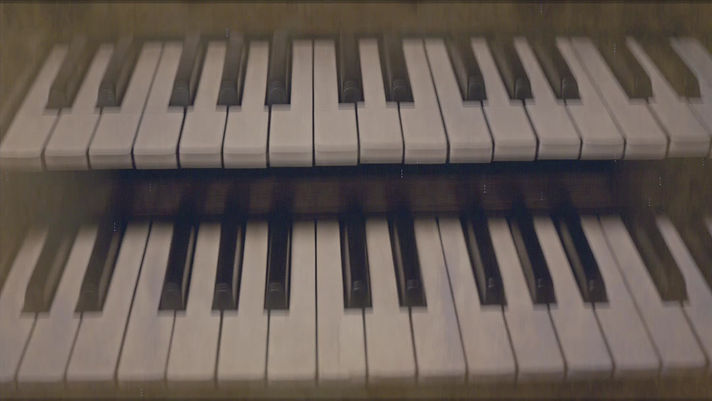
Das Wohltemperierte Zusammenspiel
Das Wohltemperierte Zusammenspiel is a cycle of twenty-four works arranged in four books: Arche, Katharsis, Agon, and Athenis.
Inspired by Bach’s Das Wohltemperierte Klavier and the affect theory of C. F. D. Schubart, each movement explores the emotional character of a tonal centre while reflecting on the nature of musical performance.
Across the four books, the cycle moves from origin through purification and struggle toward reflection. Its larger form becomes more than a musical architecture: it offers a framework for thinking about human becoming, conflict, memory, and transformation.
The project alternates between works for professional musicians and amateurs, creating a space in which virtuosity and everyday participation coexist. The pieces are conceived as co-creative scores: the notation invites the musicians to shape the performance together with the composer, so that the score does not simply prescribe a result, but enters the performance as an active presence in both playing and listening.
The word "temperierte" is understood here not only in the musical sense, but also in the sense of moderation, adjustment, and balance. Just as tones in a tuning system are carefully adjusted to coexist within a shared space, the performers must continuously adjust to one another through listening, timing, and response. The work thus explores how musical sound can become a field in which human relations are negotiated, shaped, and tempered through the act of playing together.
Each movement unfolds in two layers: a Preludium and a Zusammenspiel. The visual material on this website forms the Preludium, an opening space of reflection, while the downloadable score constitutes the Zusammenspiel, where the work takes shape through performance. In this way, the Preludium prepares both performers and listeners for each Zusammenspiel.
The work can also be placed in relation to thinkers and artists who understand meaning not as something sealed inside a finished object, but as something that comes into being between presences. In Martin Buber, one finds the importance of encounter; in Mikhail Bakhtin, the interplay of distinct voices; in Hans-Georg Gadamer, understanding as something that happens in interpretation and dialogue; and in Maurice Merleau-Ponty, the sense that perception is embodied, relational, and shaped through contact with the world. Among composers, it stands near John Cage, Pauline Oliveros, and aspects of Cornelius Cardew’s experimental and Scratch Orchestra period, all of which opened music toward listening, situation, and human relation rather than pure control. It also recalls Bertolt Brecht’s attention to the critical awareness of the spectator, Umberto Eco’s idea of the open work, and Lygia Clark’s understanding of art as something completed through the experience of those who enter it.
In this sense, Das Wohltemperierte Zusammenspiel belongs to a wider tradition in which form does not close meaning, but makes space for it to appear.