

Das Wohltemperierte Zusammenspiel
The cycle is organized into four books:
Arche, Katharsis, Agon, and Athenis.
Each movement unfolds in two parts:
Preludium – visual layer.
Zusammenspiel – score for performance.
The Preludium opens the visual dimension of the work; the Zusammenspiel gives it performative form.

ARCHE
E minor
- where a brother becomes mine
PRELUDIUM:
Premiered:
Emanuel Vigeland's Mausoleum.
Saturday, May 31st, 2025
Performed by Vegard Lund and Åsmund Stener Olsen



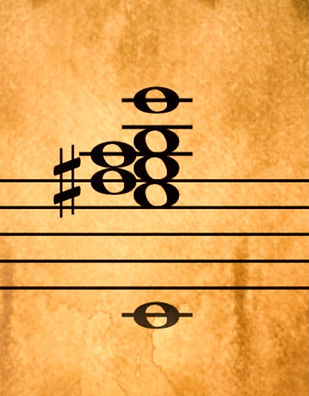
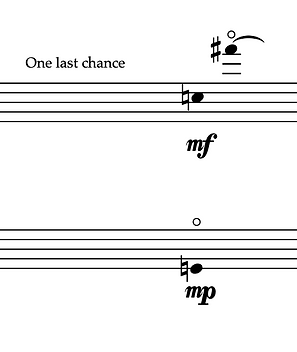


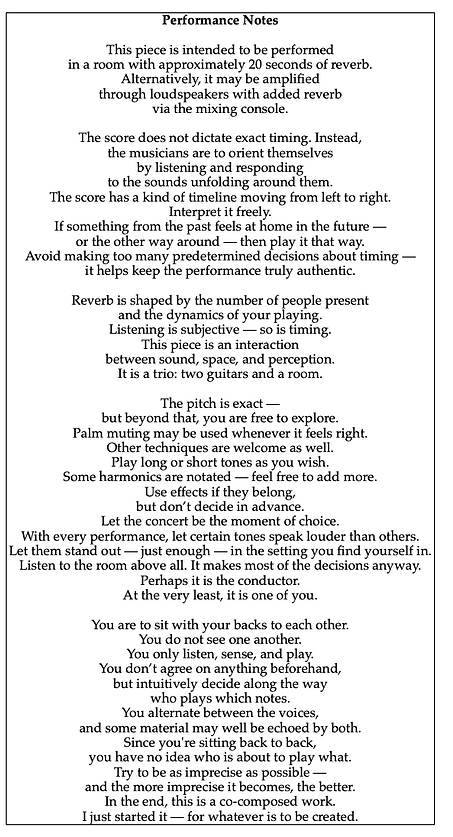
He did not knock at my door. He opened it for me.
KATHARSIS


C-minor
Teneritas in Mutatione - Tenderness in Change
for solo viola

Preludium:
A solo viola carries this alone.
The performer stands between the score’s anacrusis and what remains unresolved.
Co-composing.
The score is an invitation and a contribution.
It performs with the violist — a duet across time and context.
Here, fear meets necessary passion,
and love meets necessary fear.
No feeling is purely good.
None of us are safe.
The music lasts as long as the feeling lasts.
It follows the duration of emotion,
which cannot be held too long or too briefly.
Together, we know the timing.
It is not in the score alone,
nor in the performer alone,
but in something that arises between them —
and perhaps in you.
When the sound comes to rest,
it is not an ending, yet still the end.
Every feeling passes.
There is no need to acknowledge what follows.
The emotions have been felt.
Perhaps enough.
Perhaps for all of us.
Perhaps for no one.
Whose emotions were these?
The performer’s? The composer’s?
Did you feel something?
Alone?
Will there be an echo?
Will it return?
After a while, the performer gently steps out of the state they have carried
and slowly leaves the stage.
No applause.
Only the pull fading.


Preludium:


If you remember being alive, you are still here.

The score
Schubart describes B♭ major as a key of cheerful love, clear conscience, and hope for a better world.
In Spes Hilaris, this character is carried by an invitation to play with openness and presence, allowing the pleasure of sound itself to become the starting point of the performance.

F minor
Desiderium Sepulcri
(Longing for the Grave)

Arthur Schopenhauer
Cosmic Pessimism

Søren Aabye Kierkegaard
The leap of faith
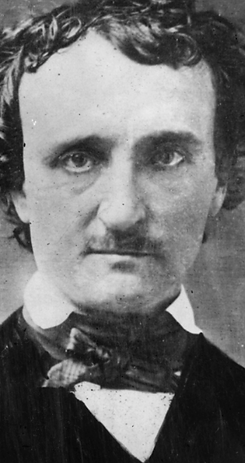
Preludium:
Edgar Allan Poe
Beautiful Decay

Emily Dickinson
Intimate Eternity


Beneath the improvising ensemble lies a concealed electroacoustic field of transformation.
It unfolds through four states — Despair, Suffering, Eternity, Tomb — not as narrative episodes, but as conditions of pressure, gravity, and depth.
This layer is not accompaniment. It is ground: a subterranean resonance that progressively alters the space in which the musicians move. The players do not depict it; they remain inside its conditions.
The field begins in instability, condenses into weight and resistance, opens briefly into a suspended breadth of time, and finally contracts into a darker stillness, as if all motion were slowly subsiding back into the earth.


Death comes anyway. Nothing to worry about.


From the dark cosmos of Arthur Schopenhauer
to the existential abyss of Søren Kierkegaard,
through the haunted inwardness of Edgar Allan Poe
to the quiet infinity of Emily Dickinson —
the Preludium moves through visions of despair, inwardness, death, and the stillness that lies beyond them.
Depression may become a passage toward transformation.


D Major
Victory, Non-Sense and Love
Being crazy is a serious competence

Have fun.
Logic does not necessarily lead to truth.

Preludium


